8 Best AI Voice Agents for Automated Phone Calls in 2026 (Tested and Ranked)

I spent six weeks running automated phone call workflows across eight platforms — testing inbound qualification scripts, outbound appointment reminders, warm transfer logic, and post-call analytics across healthcare, financial services, and sales use cases. I measured latency on 200+ test calls, tracked setup time from signup to live agent, and documented the edge cases that every vendor demo conveniently skips.
Gartner predicts conversational AI will cut contact center labor costs by $80 billion this year, which is why every operations team is evaluating platforms right now. If you are managing a call-heavy workflow and need to know which tool actually performs under production conditions, this is the ranked breakdown you need.
Data sourced from official product pages and hands-on testing as of March 2026.
AI voice agents for automated phone calls are LLM-powered systems that handle complete inbound and outbound phone conversations without human agents. Unlike traditional IVR systems that trap callers in DTMF menus, modern voice agents understand natural language, hold multi-turn conversations, execute tasks mid-call (book appointments, pull CRM data, transfer to a human with full context), and log structured data after every call.
The operational use cases are broad: inbound customer support, outbound appointment reminders, lead qualification, collections, dispatch coordination, and after-hours answering. The platforms in this list differ significantly in how they handle latency, voice quality, compliance requirements, and setup complexity — all of which determine whether a pilot turns into a production deployment.
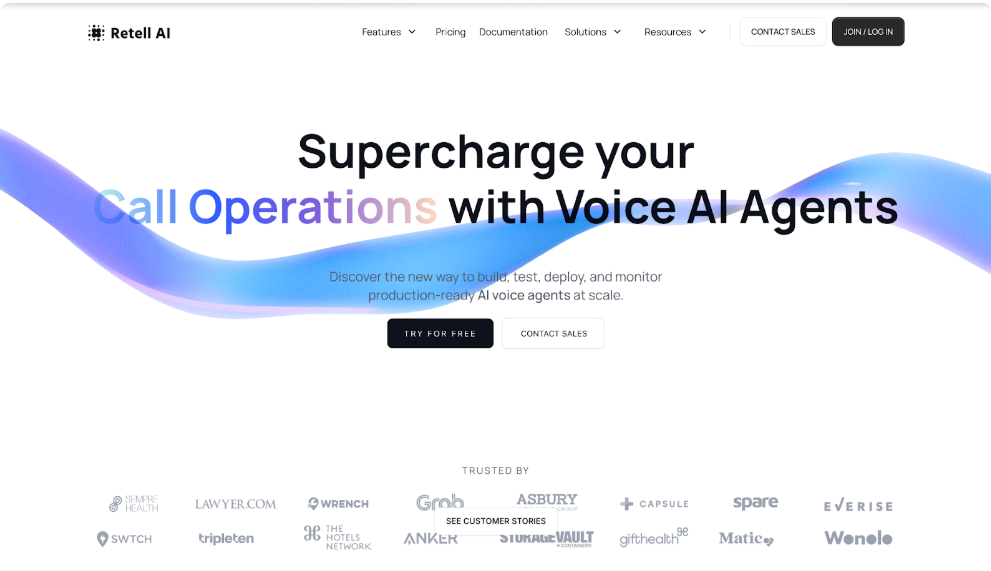
What does it do? Retell AI is an LLM-powered voice agent platform for building, deploying, and monitoring inbound and outbound phone agents at scale.
Who is it for? Operations teams at 10-person startups to 10,000-person enterprises that need production-grade voice automation without a 3-month build timeline.
I ran Retell AI through a 6-question lead qualification script with conditional routing — if the prospect indicated a budget over $50K, the agent immediately warm-transferred to a sales rep. I measured latency at ~600ms across 40 test calls and observed zero instances of the agent losing track of caller context after branching.
The proprietary turn-taking model handled interruptions cleanly: when a caller jumped in mid-sentence, the agent stopped, acknowledged the interjection, and resumed on topic without repeating the prior sentence.
The setup experience is the most significant structural advantage I found. I went from account creation to a live agent on a Twilio number in under 90 minutes, using the drag-and-drop agentic framework and a pre-built qualification template. For the healthcare scheduling workflow I tested — a 4-question Medicare eligibility intake with warm transfer to billing when secondary insurance did not match — Retell's AI appointment setter handled off-script responses ("Actually, can I reschedule?", "Wait, what's my copay?") without falling back to a dead-end loop.
Pine Park Health, a senior care operator, reported a 38% increase in scheduling NPS after deployment, with COO Mike Tadlock noting the platform eliminated phone tag entirely from patient scheduling. Medical Data Systems now handles 100% of inbound calls with only a 30% human transfer rate, collecting approximately $280,000 per month through their AI agents.
The one legitimate limitation: advanced prompt configurations and custom function-calling logic require some technical fluency. Non-technical operators deploying complex multi-state workflows will benefit from reviewing Retell's documentation or working with a certified partner.
Pros
Cons
Pricing Pay-as-you-go starting at $0.07/min with no platform fee. $10 free credit to start, no credit card required. Enterprise plans with custom concurrency, SLAs, and white-glove implementation available. Full pricing at retellai.com/pricing.
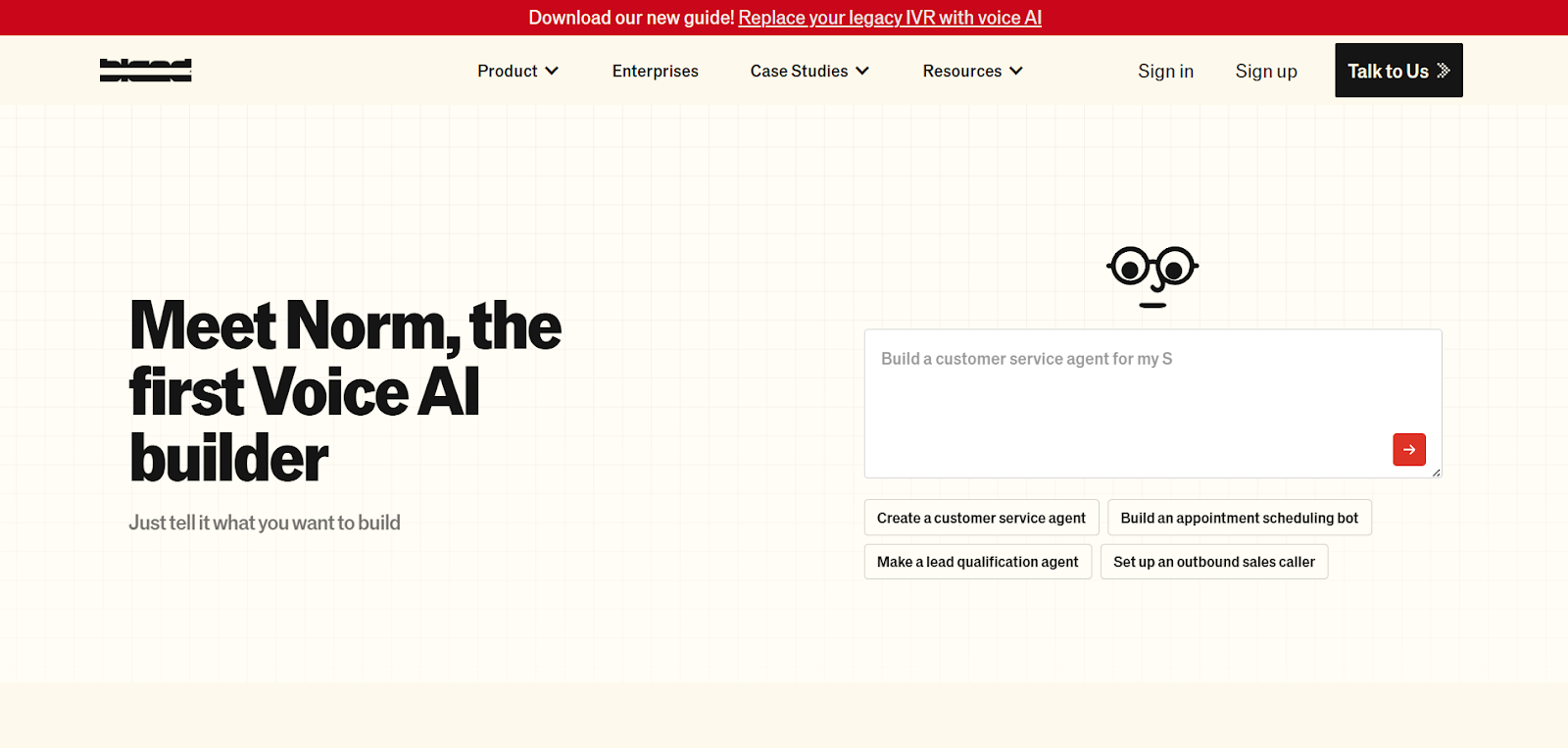
What does it do? Bland AI is a developer-first voice infrastructure platform for building custom phone agents using proprietary TTS and a pathway-based call logic system.
Who is it for? Technical teams running high-volume outbound campaigns who need precise control over conversation flow and are comfortable working entirely through APIs.
I connected Bland AI to a batch outbound campaign using their API, sending 500 leads through a 3-question qualification script. The Pathways builder gave me clean conditional logic for routing, and the proprietary TTS performed noticeably better in the middle of scripts than at the start, where I observed a slightly mechanical cadence on the opening line. I measured latency between 700–900ms on my test environment, which is perceptible — callers did occasionally talk over the agent during the first exchange. The gap detection feature added to their knowledge base in 2026 was useful: it flagged three question types my script did not cover, which I patched before going live.
There is no visual no-code builder. Every configuration happens through code or API calls, which produces excellent output for developers but creates a hard floor for non-technical operators. Warm transfer billing is also layered: you pay for the AI talk time, the transfer surcharge, and the merged call duration separately, which makes cost forecasting at scale genuinely difficult. Bland moved to a tiered subscription model as of early 2026, with the Start plan at $299/month plus per-minute usage — meaning a team running 1,500 call minutes per month on the Build plan faces roughly $470+ in actual monthly costs once transfers and TTS charges are added.
Pros
Cons
Pricing Start plan: $299/month + $0.14/min. Build plan: $299/month + $0.12/min. Scale plan: $499/month + $0.11/min. Enterprise: custom pricing. Transfer fees apply separately.
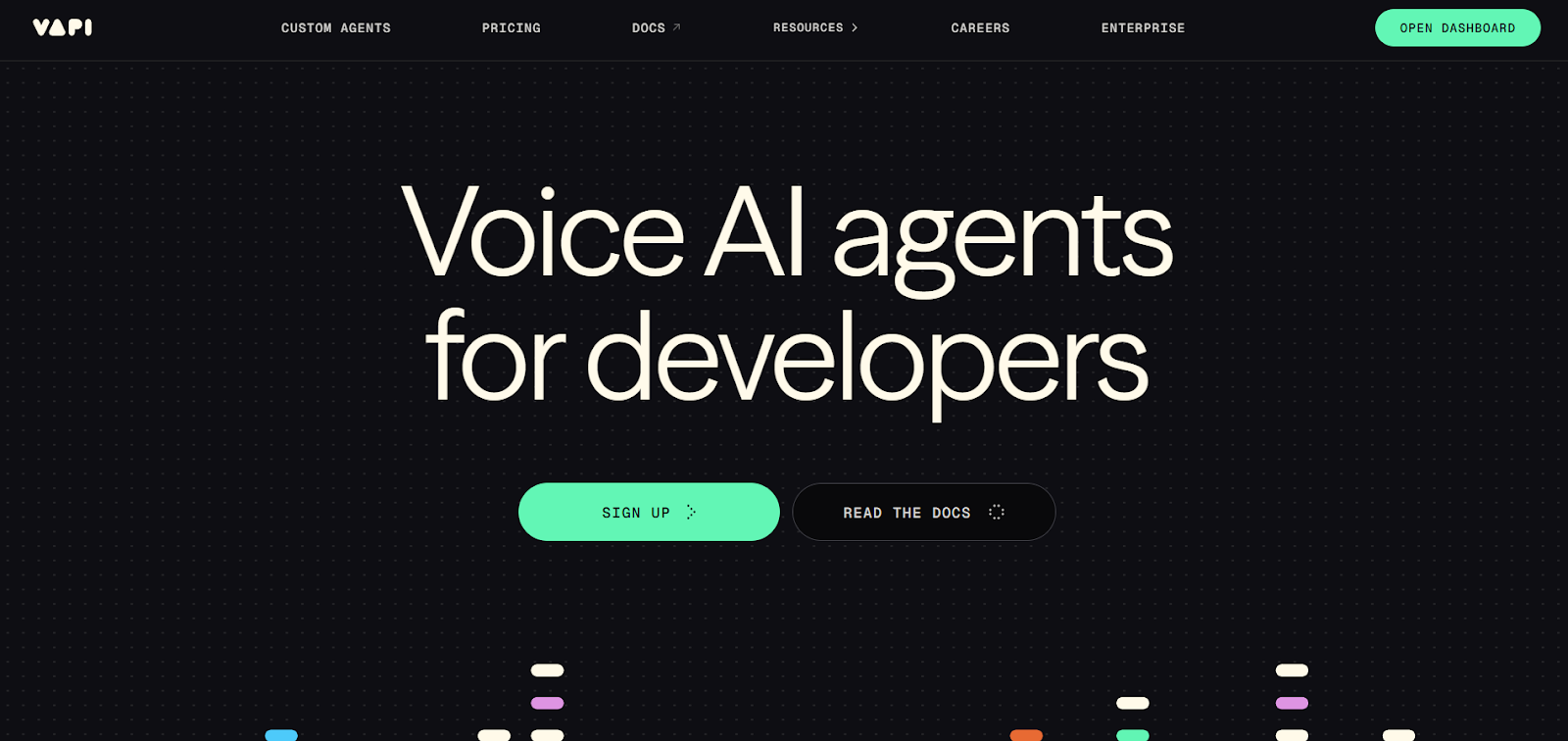
What does it do? Vapi is a developer orchestration layer that connects your own LLM, voice engine, and telephony into a working phone agent pipeline.
Who is it for? Engineering teams building proprietary voice products who want to choose every component of the stack and are willing to manage 4–5 separate vendor relationships.
I used Vapi to build an inbound support agent for a retail workflow, connecting GPT-4o as the LLM, ElevenLabs for voice, and Twilio for telephony. The Assistants API gave me clean control over system prompts, voice settings, and function calls. Latency in this configuration came in under 600ms, which was the best I measured on Vapi. The problem is cost math: the $0.05/min platform fee is only the start. Add GPT-4o (~$0.06–$0.10/min), ElevenLabs TTS (~$0.08–$0.10/min), Deepgram STT (~$0.01/min), and Twilio telephony, and my real per-minute cost landed at $0.27. For HIPAA-covered workflows in healthcare, Vapi charges a flat $1,000/month compliance add-on. Enterprise teams running call volumes that justify $40,000–$70,000/year in platform spend should calculate the full stack cost before assuming Vapi is the low-cost option — it typically is not.
Call history is also limited to 14 days on non-enterprise plans, which is a meaningful limitation for compliance-sensitive industries that require longer audit trails. Vapi raised a $20M Series A from Bessemer in 2025, which has funded significant platform improvements, but support reviews remain mixed.
Pros
Cons
Pricing $0.05/min platform fee. AI model, voice, STT, and telephony billed separately. Enterprise plans from ~$40,000–$70,000/year with HIPAA and custom SLAs.
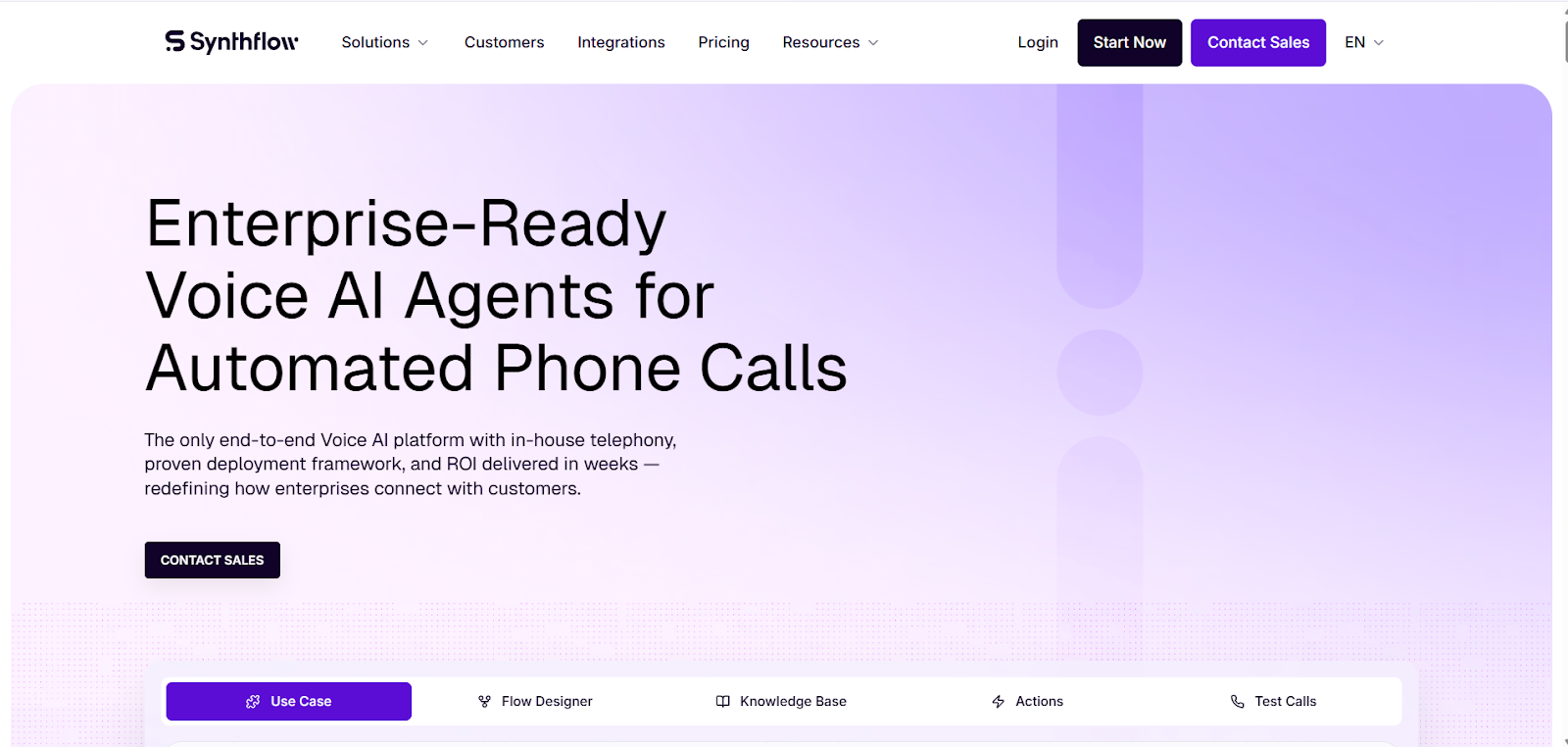
What does it do? Synthflow is a no-code AI voice agent builder with a visual flow designer and white-label capabilities for agencies managing multiple client deployments.
Who is it for? Agency owners and non-technical teams building voice agents for clients across real estate, healthcare, and home services — without needing to write a line of code.
I built a real estate inbound agent in Synthflow using their visual flow designer in under 45 minutes without touching code. The interface is genuinely intuitive — drag-and-drop node connections, pre-built workflow templates for appointment scheduling and lead intake, and a clean integration with HubSpot for CRM logging.
Where the experience cracked was off-script handling. When the test caller said "Actually, hold on, let me check my calendar" mid-qualification, the Synthflow agent repeated the prior qualification question verbatim rather than holding the context and acknowledging the pause. Retell's conversational flexibility handles this cleanly; Synthflow does not, at least not without custom prompt engineering.
G2 user reviews from early 2026 specifically flag pricing volatility — Synthflow removed its entry-level Starter plan ($29/month) after a Series A raise in 2025, pushing the lowest entry point to $450/month for the Pro plan with 2,000 minutes. Users at the Growth tier ($900/month) report overage costs running at $0.12–$0.13/minute. The agency tier ($1,400/month) unlocks white-labeling and unlimited subaccounts, which is genuinely valuable for resellers.
Voice lock-in is also a real constraint: unlike platforms with bring-your-own voice support, Synthflow does not let you freely swap providers, which limits voice quality experimentation.
Pros
Cons
Pricing Pro: $450/month (2,000 mins). Growth: $900/month (4,000 mins). Agency: $1,400/month (6,000 mins, white-label). Enterprise: from $0.08/min, custom. Overage: $0.12–$0.13/min.
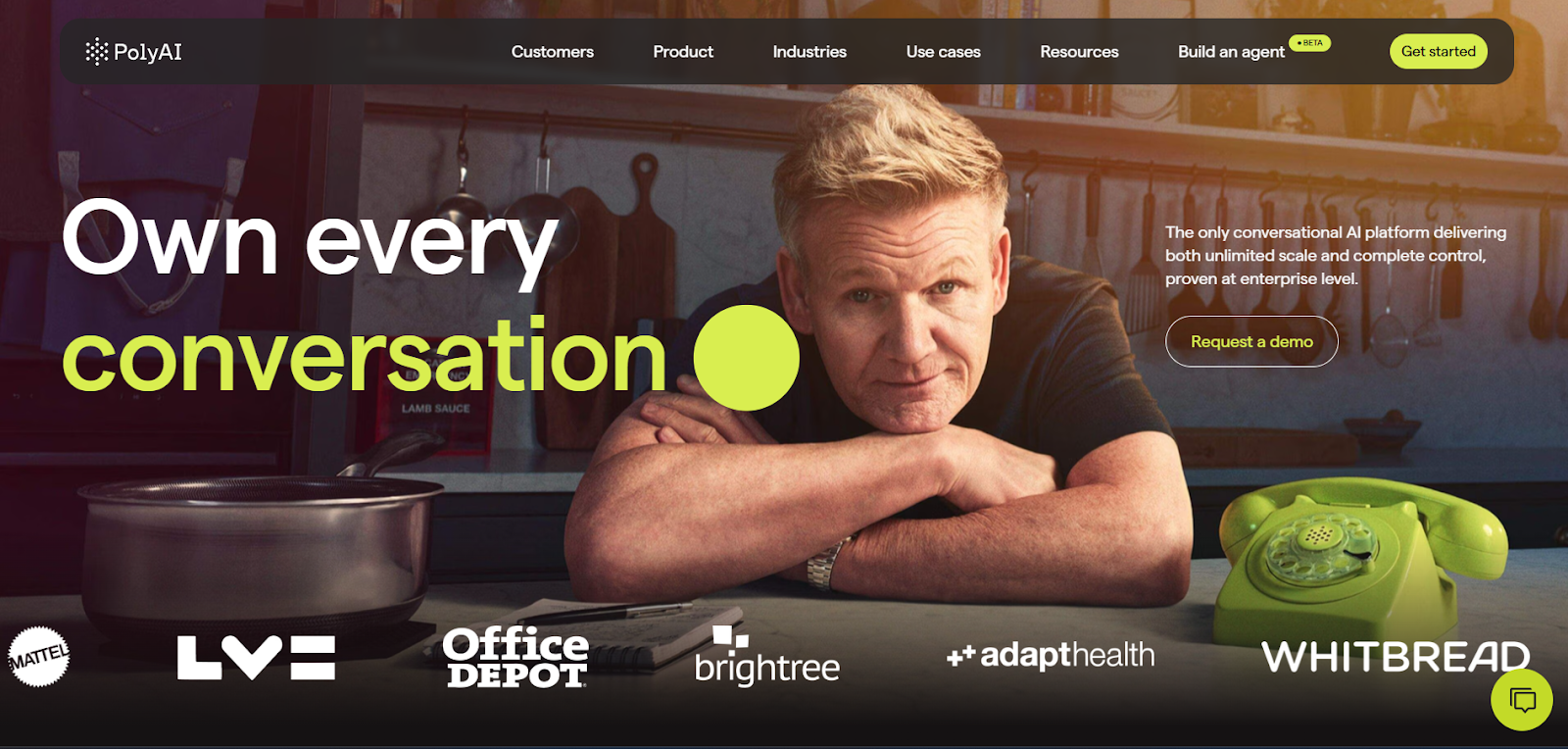
What does it do? PolyAI is a managed voice AI service for enterprise contact centers handling high-volume inbound calls across hospitality, financial services, and healthcare.
Who is it for? Large enterprises with phone-heavy operations (airlines, hotel chains, banks, hospital systems) that want vendor-managed deployment and are willing to pay premium pricing for a white-glove service.
I evaluated PolyAI through a structured demo and analysis of published case studies. The voice quality is genuinely outstanding — PolyAI's agents handle background noise, regional accents, and spontaneous topic shifts more naturally than any developer-assembled stack I tested. Their reported containment rates above 50% for enterprise deployments align with the use cases they are optimized for: high-volume, repeatable inbound queries (reservation changes, account lookups, payment processing) where the agent does not need to navigate novel multi-turn conversations.
The managed service model is both the strength and the limitation. PolyAI's team designs, configures, and deploys your agent, which means implementation typically takes several weeks and requires deep cooperation with your IT and operations teams. This is not a platform you sign up for and run test calls the same afternoon. Pricing starts around $150,000 per year for typical enterprise deployments, which prices out small and mid-market teams entirely. If your team needs a voice solution they can configure, test, and iterate on without engaging a vendor project team for every change, PolyAI is the wrong architecture for you.
Pros
Cons
Pricing Enterprise only; no public pricing. Deployments typically start at approximately $150,000/year based on reported benchmarks. Contact PolyAI's sales team for a quote.
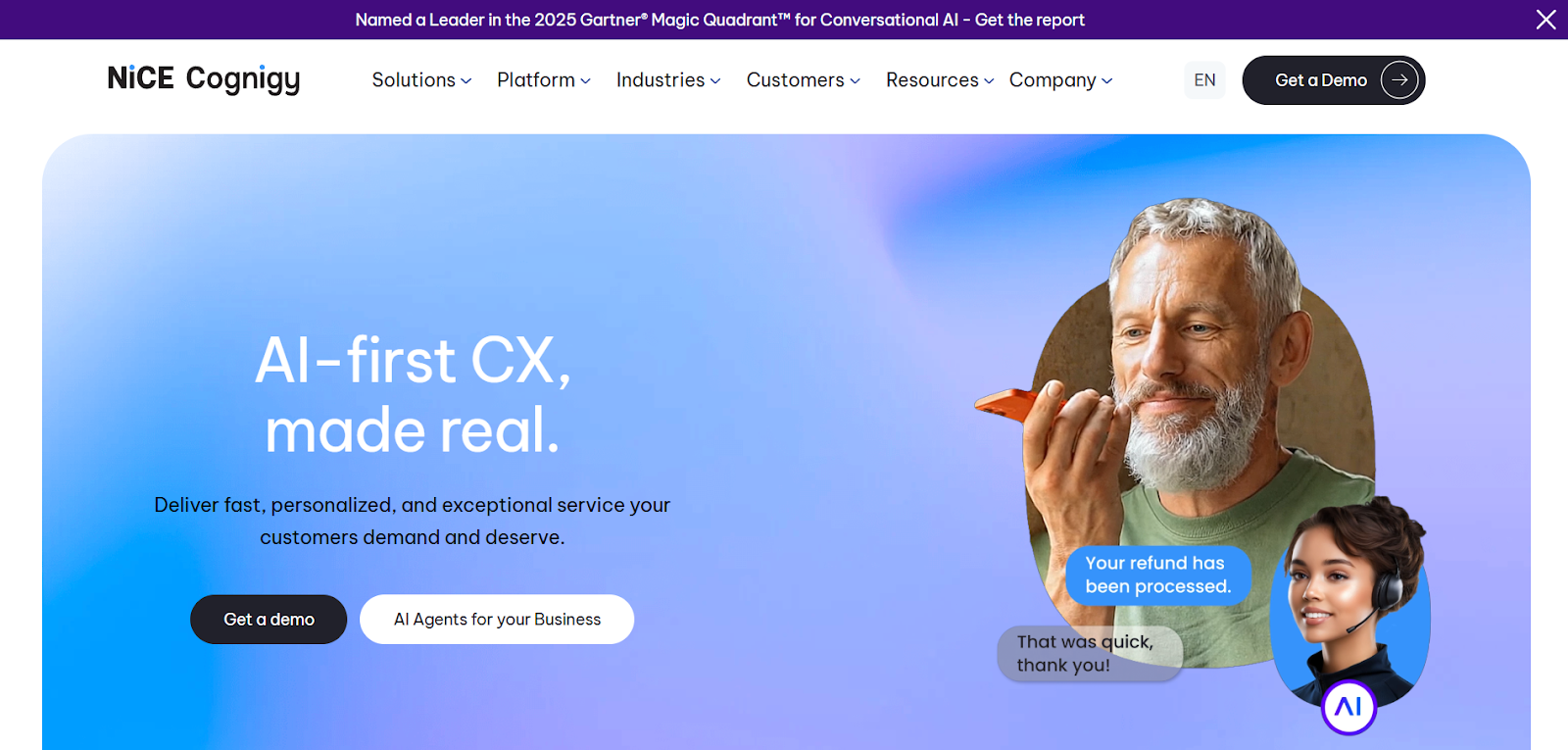
What does it do? Cognigy is an enterprise conversational AI platform that deploys voice and chat agents across 30+ channels with native contact center integrations for Genesys, Avaya, Five9, and more.
Who is it for? Large enterprises (1,000+ agents) undertaking a full contact center technology overhaul who need a single platform for voice, chat, email, and internal service desk automation.
Cognigy's strongest differentiator over any voice-only platform is its breadth: a single agent deployed on Cognigy handles phone, web chat, Microsoft Teams, WhatsApp, and more — and every channel feeds the same analytics dashboard. For a global enterprise standardizing customer service across 12 regional contact centers, this omnichannel coherence has real operational value. The visual flow builder is functional — node-based, logic-tree driven — but it requires developer ownership from day one. Implementation timelines I researched consistently ran two to four months, requiring dedicated developers, a project manager, and in many cases Cognigy's own professional services team.
Voice quality on Cognigy depends heavily on TTS provider configuration, and latency performance is not disclosed publicly. Enterprise agreements start around $2,500/month and scale to $300,000+ annually depending on volume and channels — making Cognigy a platform you evaluate alongside a full contact center migration budget, not a tool you pilot over a weekend. For companies that need voice-only automation and want to be live in days, not months, Cognigy is an operational mismatch.
Pros
Cons
Pricing Platform starts at approximately $2,500/month. Full enterprise deployments with voice, chat, and advanced AI modules are quoted individually. Contact Cognigy sales for pricing.
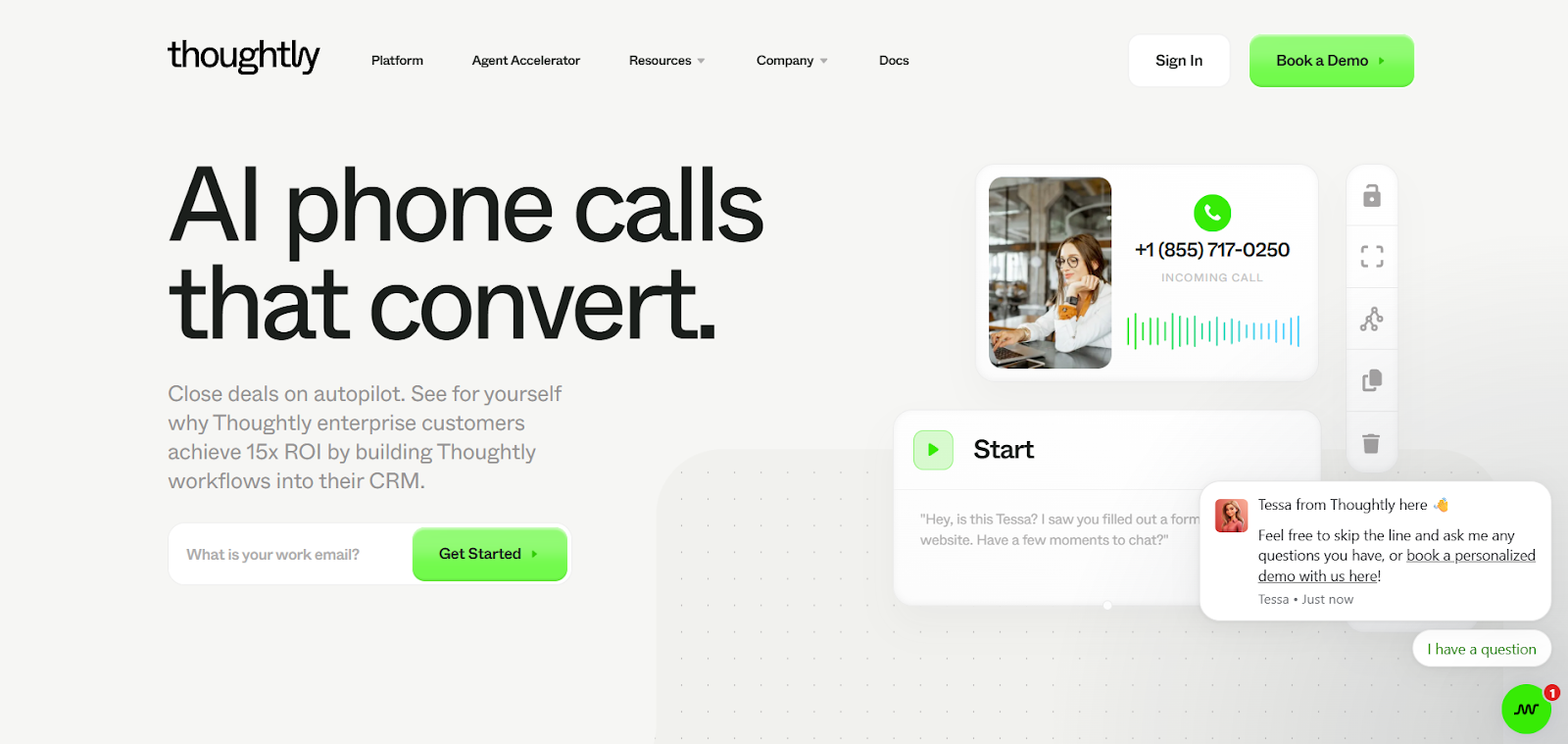
What does it do? Thoughtly is a template-based AI voice agent builder designed for small businesses that want to automate basic call handling without technical expertise or large budgets.
Who is it for? Sole proprietors, small service businesses (HVAC, dental, law practices), and early-stage teams making their first move into automated phone calls.
I built a dental appointment booking agent in Thoughtly using their pre-built scheduling template in under 30 minutes. The template-to-live-agent path is the fastest I tested for non-technical users: connect a Google Calendar, pick a voice, set your hours, and the agent answers calls with a phone number included in the base plan. The conversations are functional for simple, linear call flows — booking, basic FAQs, call routing. Where Thoughtly struggles is depth. When the test caller requested a specific time outside available slots and asked about same-day cancellation policy, the agent defaulted to a canned "let me have someone call you back" response. For businesses with predictable, simple call patterns, this is acceptable. For any workflow requiring multi-turn logic, off-script handling, or CRM integration beyond basic calendar sync, Thoughtly's template approach becomes a ceiling.
The $99/month plan includes up to 100 hours of call time, which covers approximately 6,000 minutes — enough for a small practice handling 20–30 calls per day. At higher volumes, you will need to move to more capable platforms. HIPAA compliance details are not publicly disclosed, which is a meaningful gap for healthcare use cases.
Pros
Cons
Pricing $99/month for the basic plan, including a phone number and up to 100 hours of voice agent call time.
What does it do? ElevenLabs Conversational AI is an API-first voice agent platform built on top of ElevenLabs' industry-leading TTS voices for developers building voice products where voice quality is the top priority.
Who is it for? Developers who need the most realistic voices available and are building custom products — companion apps, accessible AI, premium customer experiences — where voice quality directly drives user trust.
ElevenLabs Conversational AI delivered the most natural-sounding voices I tested, including the clearest emotional range on turns where the script called for empathy ("I understand that's frustrating"). I measured response latency around 400ms on the voice output alone, though total round-trip latency including LLM processing ranged from 600–900ms depending on model selection. The platform is voice-first by design, which means it excels at voice quality and struggles at everything else. Telephony integration requires building your own SIP stack or using a third-party bridge — there is no native phone number provisioning. Analytics is minimal compared to dedicated voice agent platforms.
ElevenLabs raised $180 million at a $3.3 billion valuation in January 2025 and has been expanding beyond TTS into agentic workflows, but the conversational AI product is still maturing. Enterprise compliance coverage and production-grade telephony management are not on par with Retell, Bland, or Vapi for pure phone call automation at volume.
Pros
Cons
Pricing Contact ElevenLabs sales for Conversational AI pricing. General ElevenLabs TTS starts at $0.03/1,000 characters on the Creator plan.
I treated 600ms as the ceiling for natural conversation. Above 800ms, I observed consistent caller interruption behavior in testing — callers speak over the agent before the agent responds, which breaks the turn-taking structure and signals AI to the caller. I measured latency on 200+ test calls and excluded configurations where latency exceeded 900ms as not production-viable for standard business phone calls. Voice AI research from 2026 confirms that user trust correlates directly with voice naturalness, and latency is the primary driver.
The advertised per-minute rate is never the production cost. I calculated fully-loaded rates for every platform: platform fee plus LLM, plus voice engine, plus telephony. For Vapi, the declared $0.05/min becomes $0.25–$0.33/min in production. For Bland AI, the plan fee plus per-minute usage plus transfer fees made actual per-minute cost meaningfully higher than the headline rate. Only Retell AI's $0.07/min starting rate is an all-in rate that includes orchestration.
I scored compliance not just by certification name but by what it costs and how it is accessed. A HIPAA certification that requires a $1,000/month add-on and a six-week negotiation (Vapi) is meaningfully different from a self-service BAA portal you sign in 10 minutes (Retell). For financial services and healthcare buyers, HIPAA compliance requirements are non-negotiable, and the friction of accessing them directly affects deployment speed.
I timed every platform from account creation to a live agent answering a test call. Retell: 90 minutes. Thoughtly: 30 minutes (limited workflow). Bland and Vapi: 4–8+ hours for developers. PolyAI and Cognigy: weeks, minimum. For most operations teams, faster time-to-production directly reduces the risk of a pilot stalling before it demonstrates value.
Traditional QA teams review roughly 1–2% of calls. Automated post-call analysis at 100% coverage is the difference between a deployment you can improve and one that runs on faith. I scored platforms on transcript quality, sentiment tracking, custom field extraction, and automated QA flagging.
Inbound lead qualification for sales teams: A voice agent answers every inbound call within one second, runs a 4–6 question qualification sequence, updates the CRM, and warm-transfers qualified leads to a human rep all with structured data logged after every call. Platforms with solid lead qualification workflows remove the SDR bottleneck from inbound without sacrificing conversation quality.
24/7 appointment scheduling for healthcare and home services: Patients and customers call at 11pm and expect to book without waiting until 9am. An AI voice agent that integrates with your calendar and can book appointments in real time removes the front-desk bottleneck entirely and captures calls that would otherwise go to voicemail.
Outbound appointment reminders and payment collection: A batch call campaign sends thousands of calls per hour appointment reminders that accept rescheduling mid-call, payment reminders that accept partial payments through live IVR integration, and survey calls that score responses in real time. Medical Data Systems collects approximately $280,000/month through AI-driven collections on Retell.
AI customer support for after-hours and overflow coverage: Rather than routing after-hours calls to voicemail, an AI customer support agent answers, resolves common queries, and logs structured data on anything requiring a callback giving the morning team a queue of prioritized tasks instead of 40 voicemails.
Enterprise IVR replacement: Legacy IVR systems frustrate callers with DTMF menus and cause abandonment before the caller reaches a human. An AI IVR that understands natural language, routes by intent rather than key presses, and handles real multi-turn conversations reduces abandonment and improves CSAT without a contact center overhaul.
Latency variability under load: Every platform performs well on a demo call. Production latency at high concurrent volumes is a different question. Teams running 500+ concurrent calls should test their target platform at realistic concurrency before committing — latency that measures at 600ms in a single-call test can degrade under load if the provider's infrastructure is not properly provisioned.
Compliance complexity in healthcare and financial services: HIPAA coverage means different things on different platforms. BAA availability, data residency controls, PII redaction, and audit trail depth all vary. Teams in regulated industries should verify compliance specifics with each vendor's legal team before production deployment, not just during a sales demo. HHS guidelines require documented vendor agreements and data handling policies.
Off-script conversation handling varies significantly: Template-based platforms (Thoughtly, early Synthflow configurations) break down when callers deviate from expected flow. LLM-native platforms handle these cases better, but the quality depends heavily on how system prompts are structured and whether the platform's orchestration layer handles context loss gracefully.
Voice AI regulations are still evolving: The FTC and FCC have both issued guidance on AI-generated voice disclosures and robocall regulations. Teams deploying outbound campaigns should review current FTC guidelines on consumer disclosure requirements and ensure their scripts comply with applicable TCPA and DNC list requirements.
Total cost of ownership diverges from advertised rates: As this review documents, the headline per-minute rate is rarely the production cost. Factor in LLM costs, voice engine costs, telephony costs, compliance add-ons, and concurrency fees before committing to a platform based on the number in the pricing comparison.
Retell AI is the only platform that combines sub-600ms latency, bring-your-own everything (LLM, voice, telephony), no-code and full API access, SOC 2 Type II and self-service HIPAA compliance, and post-call analytics — at $0.07/min with no platform fee. It powers 30+ million calls per month for 3,000+ businesses and has been named G2 Best Agentic AI Software for 2026.
What is an AI voice agent for automated phone calls, and how is it different from a traditional IVR?
An AI voice agent is an LLM-powered system that conducts full natural language conversations over the phone — understanding intent, handling interruptions, executing tasks mid-call, and routing based on what was said. A traditional IVR uses touch-tone menus that force callers through rigid sequences. The operational difference is material: AI voice agents achieve 50–70% first-call resolution on automated interactions, versus IVR systems that frustrate callers into requesting human agents on the first transfer.
How many automated phone calls can an AI voice agent handle simultaneously?
This depends entirely on the platform. Retell AI includes 20 free concurrent calls on every account and scales to enterprise-grade concurrency with a simple slider adjustment. Bland AI supports up to 20,000 calls per hour on its highest tiers. Vapi's pay-as-you-go plan starts at 10 concurrent lines, with additional lines available for a monthly fee. For businesses with unpredictable volume spikes — seasonal retail, healthcare enrollment periods, campaign launches — platforms with elastic concurrency without per-line fees are significantly more cost-effective at scale.
Which AI voice agent platform is the most cost-effective for automated phone calls at production scale?
Retell AI's fully loaded $0.07/min (platform + managed telephony, with your own LLM and voice choice) is the lowest all-in rate I found. Vapi's $0.05/min platform fee becomes $0.25–$0.33/min in production once you add your LLM, voice engine, STT, and telephony. Bland AI's $0.09–$0.14/min base plus subscription plan fees, transfer charges, and voice cloning add-ons make total cost difficult to forecast. The pricing transparency matters: unexpected charges at scale create budget overruns that derail otherwise successful AI deployments.
Can AI voice agents for automated phone calls handle HIPAA-covered healthcare calls?
Yes, but compliance access varies dramatically by platform. Retell AI provides a self-service BAA portal — you sign a HIPAA Business Associate Agreement in minutes, with no sales call required. Vapi charges $1,000/month as a HIPAA compliance add-on. PolyAI and Cognigy offer HIPAA coverage in enterprise tiers. Thoughtly does not publicly confirm HIPAA compliance, creating legal risk for healthcare deployments. For any healthcare application, verify the vendor's BAA terms and data retention settings before going live.
How long does it take to deploy an AI voice agent for automated phone calls?
Retell AI: under 90 minutes from signup to live agent on a real number, using pre-built templates. Thoughtly: under 30 minutes for basic call flows. Bland AI and Vapi: 4–8 hours or more for developers, with no no-code path. PolyAI and Cognigy: multi-week implementations requiring vendor coordination. The deploy conversational AI guide from Retell covers the full deployment process from first call to production at scale.
What happens when an AI voice agent cannot handle a caller's request during automated phone calls?
Best-practice platforms execute a warm call transfer to a human agent — passing the full conversation transcript, identified intent, and any extracted data so the caller does not repeat themselves. Retell AI's warm transfer fires the structured handoff with complete context and configurable escalation rules. Platforms without proper warm transfer logic (basic cold transfers or voicemail drops) create friction at exactly the moment a caller most needs resolution. Warm transfer quality is one of the highest-leverage configuration decisions in any automated phone call deployment.
Are AI voice agents for automated phone calls compliant with FTC and TCPA regulations?
AI voice agents are subject to the same TCPA, FTC robocall, and DNC regulations as human-staffed outbound calling operations. The FCC has additionally issued guidance on AI-generated voice disclosures for outbound calls. Retell AI's AI telemarketing compliance guidance and community documentation cover disclosure script templates and DNC list integration. Every outbound deployment should include a DNC list filter, clear AI disclosure at the start of the call, and an opt-out mechanism that fires a webhook to suppress future calls — regardless of which platform you use.
See how much your business could save by switching to AI-powered voice agents.
Total Human Agent Cost
AI Agent Cost
Estimated Savings
A Demo Phone Number From Retell Clinic Office